


Meditation For Addiction Recovery, Types & Benefits
Meditation is a strong yet simple technique with many health benefits, including reducing stress and anxiety. Due to the impactful effects of meditation it has become more available in both substance abuse and general wellness circles as a form of therapy. The overall goal of meditation is to synchronize the mind and body for improved mental wellbeing and an enhanced quality of life. By taking deep breaths, chanting a mantra (or another focused word), and focusing on the breath, the result is increased awareness and connection.
Meditation For Addiction Recovery can be a powerful tool for overcoming Substance Use Disorders. According to the scientific piece ‘Mindfulness meditation in the treatment of substance use disorders and preventing future relapse: neurocognitive mechanisms and clinical implications’, published by the U.S. National Library of Medicine, substance use disorders (SUDs) are a pervasive public health problem with deleterious consequences for individuals, families, and society.
Furthermore, SUD intervention is complicated by the continuous possibility of relapse. Despite decades of research, SUD relapse rates remain high, underscoring the need for more effective treatments. Scientific findings indicate that SUDs are driven by dysregulation of neural processes underlying reward learning and executive functioning. Emerging evidence suggests that mindfulness and meditation training can target these neurocognitive mechanisms to produce significant therapeutic effects on SUDs and prevent relapse. [1]
Types of Meditation For Addiction Recovery
As stated by Healthline.com, meditation may be an ancient tradition, but it’s still practiced in cultures all over the world to create a sense of calm and inner harmony. Although the practice has ties to many different religious teachings, meditation is less about faith and more about altering consciousness, finding awareness, and achieving peace. [2]
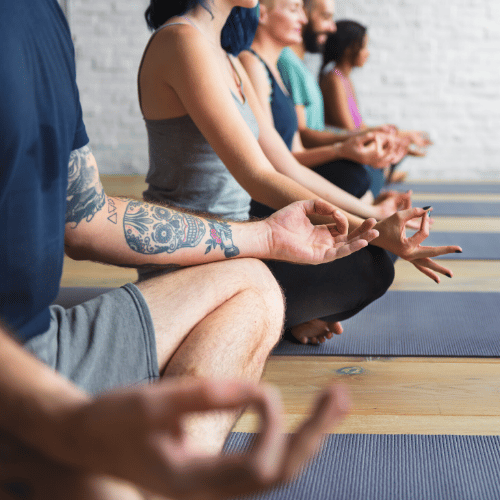
Meditation is characterized by a crossed-legged seated posture, called the lotus pose, accompanied by deep, slowed breathing. Similar to yoga, meditation can help reduce feelings of depression, anxiety, and emotional triggers, while changing brainwaves. There are also several methods that offer slightly different benefits. There are nine popular types of meditation practice.
Mindfulness meditation
Mindfulness meditation originates from Buddhist teachings and is the most popular meditation technique in the West. In mindfulness meditation, you pay attention to your thoughts as they pass through your mind. You don’t judge the thoughts or become involved with them. You simply observe and take note of any patterns.
This practice combines concentration with awareness. You may find it helpful to focus on an object or your breath while you observe any bodily sensations, thoughts, or feelings. This type of meditation is good for people who don’t have a teacher to guide them, as it can be easily practiced alone. [2]

Spiritual meditation
Spiritual meditation is used in Eastern religions, such as Hinduism and Daoism, and in Christian faith. It’s similar to prayer in that you reflect on the silence around you and seek a deeper connection with your God or Universe. Essential oils are commonly used to heighten the spiritual experience. Popular options include:
- Frankincense
- Myrrh
- Sage
- Cedar
- Sandalwood
- Palo santo
Spiritual meditation can be practiced at home or in a place of worship. This practice is beneficial for those who thrive in silence and seek spiritual growth. [2]
Focused meditation
Focused meditation involves concentration using any of the five senses. For example, you can focus on something internal, like your breath, or you can bring in external influences to help focus your attention. Try counting mala beads, listening to a gong, or staring at a candle flame.
This practice may be simple in theory, but it can be difficult for beginners to hold their focus for longer than a few minutes at first. If your mind does wander, it’s important to come back to the practice and refocus. As the name suggests, this practice is ideal for anyone who requires additional focus in their life. [2]
Movement meditation
Although most people think of yoga when they hear movement meditation, this practice may include walking through the woods, gardening, qigong, and other gentle forms of motion. It’s an active form of meditation where the movement guides you. Movement meditation is good for people who find peace in action and prefer to let their minds wander. [2]
Mantra meditation
Mantra meditation is prominent in many teachings, including Hindu and Buddhist traditions. This type of meditation uses a repetitive sound to clear the mind. It can be a word, phrase, or sound, such as the popular “Om.”
It doesn’t matter if your mantra is spoken loudly or quietly. After chanting the mantra for some time, you’ll be more alert and in tune with your environment. This allows you to experience deeper levels of awareness.
Some people enjoy mantra meditation because they find it easier to focus on a word than on their breath. This is also a good practice for people who don’t like silence and enjoy repetition. [2]
Transcendental Meditation
Transcendental Meditation is a popular type of meditation. This practice has been the subject of numerous studies in the scientific community. It is more customizable than mantra meditation, using a mantra or series of words that are specific to each practitioner. This practice is for those who like structure and are serious about maintaining a meditation practice. [2]
Progressive relaxation
Also known as body scan meditation, progressive relaxation is a practice aimed at reducing tension in the body and promoting relaxation. Oftentimes, this form of meditation involves slowly tightening and relaxing one muscle group at a time throughout the body.
In some cases, it may also encourage you to imagine a gentle wave flowing through your body to help release any tension. This form of meditation is often used to relieve stress and unwind before bedtime. [2]
Loving-kindness meditation
Loving-kindness meditation is used to strengthen feelings of compassion, kindness, and acceptance toward oneself and others.
It typically involves opening the mind to receive love from others and then sending a series of well wishes to loved ones, friends, acquaintances, and all living beings. Because this type of meditation is intended to promote compassion and kindness, it may be ideal for those holding feelings of anger or resentment. [2]
Visualization meditation
Visualization meditation is a technique focused on enhancing feelings of relaxation, peace, and calmness by visualizing positive scenes or images. With this practice, it’s important to imagine the scene vividly and use all five senses to add as much detail as possible.
Another form of visualization meditation involves imagining yourself succeeding at specific goals, which is intended to increase focus and motivation. Many people use visualization meditation to boost their mood, reduce stress levels, and promote inner peace. [2]
Benefits of Meditation For Addiction Recovery
With many of meditation’s benefits, it is clear it can be ideal for substance abuse relief to combat symptoms of withdrawal, triggers, and cravings. The benefits of meditation include:
- Reduced depression and anxiety (including social anxiety)
- Significantly reduced stress
- Increased concentration
- Improved mood
- Reduced PTSD and ADHD symptoms
- Increased creativity
- Improved attention
- Reduced brain activity
- Emotional stability
- Increased focus
- Increased academic performance
- Decreased insomnia
- Reduced Post Acute Withdrawal Symptoms
- Increased strength
- Increased flexibility
- Reduced risk of relapse
Other benefits of meditation therapy include the ability to alter brainwaves, which contribute to improved psychological function and cortisol reduction. Mindfulness practice can enhance the performance of the frontal cortex, the area of the brain that regulates planning and thinking. Meditation also impacts the amygdala, which reduces fear, and increases the activation of the anterior cingulate cortex, governing motivation and motor control.
Meditation For Addiction Recovery And Withdrawal
In cases of withdrawal-related symptoms such as anxiety, insomnia, or depression, meditation can assist in grounding the individual and calming the nervous system. A calm nervous system enhances the overall quality of sleep, and during times of wakefulness, it enables better moods.
Furthermore, those suffering emotionally imbalanced thoughts from disorders like Obsessive Compulsive Disorder can learn to observe thoughts without attachment. Meditation therapy also allows someone to actively regain control over impulses. For example, transcendental meditation has been used to reduce drug, alcohol, and nicotine abuse and the risk of relapse.
Reclaim your life with Meditation For Addiction Recovery
Addiction is a serious condition that should not be taken lightly. We Level Up Treatment Center can provide you, or someone you love, Meditation For Addiction Recovery therapy with professional and safe care. Feel free to call us to speak with one of our counselors, we can inform you about this condition giving you relevant information, our specialists know what you are going through. Have in mind that each call is private and confidential.
Sources:
[1] Priddy, S. E., Howard, M. O., Hanley, A. W., Riquino, M. R., Friberg-Felsted, K., & Garland, E. L. (2018). Mindfulness meditation in the treatment of substance use disorders and preventing future relapse: neurocognitive mechanisms and clinical implications. Substance abuse and rehabilitation, 9, 103–114. – U.S. National Library of Medicine (ncbi.nlm.nih.gov)
[2] ‘Which Type of Meditation Is Right for Me?’, Medically reviewed by Daniel Bubnis, M.S., NASM-CPT, NASE Level II-CSS. – Healthline.com
